Understanding Inventory Icons: A Versatile Icon Set for Modern Projects
Choosing the right icon set can shape the visual clarity and consistency of any project. Inventory Icons is a comprehensive collection of high-quality icons designed to serve a wide range of creative needs, from website interfaces to print materials. With both line and solid styles, editable strokes, and extensive customization options, it aims to be a go-to resource for designers who want flexibility without sacrificing cohesion. This article explores what makes this set distinct, how it compares with other approaches, and where it fits best in real design workflows.
What Inventory Icons Offers
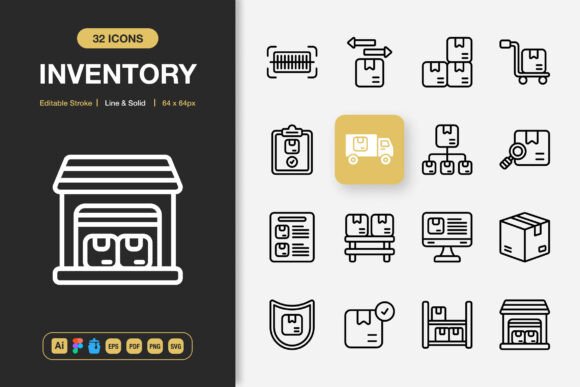
At its core, Inventory Icons provides a large library of meticulously crafted icon files. The collection emphasizes simplicity and usability, so icons remain crisp at any scale. The set includes source files in Adobe Illustrator and Figma, along with formats like EPS version 10, PDF, SVG, and transparent PNGs in multiple sizes—32px, 48px, 64px, 96px, 128px, 256px, and 512px. An Iconjar file makes organizing and browsing fast, and everything is designed for easy drag-and-drop integration.
One standout characteristic is the balance between line and solid styles. Having both within the same family means you can maintain visual harmony across different interface states—such as using line icons for inactive navigation and solid icons for active or hover states. The editable stroke feature in vector files adds another layer of adaptability, letting designers adjust weight, cap styles, and join styles without breaking the original design language.
Customization and Consistency
The ability to fully customize each icon is a significant advantage. Every element is intentionally constructed to be modified: you can change colors, resize elements independently, or mix attributes from both styles to create hybrid symbols. This approach supports brand alignment more than rigid, pre-flattened icon sets often can. The claim of “100 Customizable” underscores that no part is locked down, which is helpful when working within strict brand guidelines or when a design needs a subtle twist on a standard pictogram.
Evaluating Icon Set Formats and Compatibility
Icon sets vary widely in the file types they provide. Inventory Icons covers a broad spectrum that caters to different software pipelines. The Illustrator source file (AI) and EPS are standard for print-oriented designers who need to expand vector shapes for large-format posters or banners. Figma files directly serve UI/UX teams, making it easy to plug into component libraries. The SVG and PNG combinations provide straightforward web and mobile implementation, with PNGs pre-sized for quick placement when scalable vectors aren't necessary.
The inclusion of an Iconjar file might go unnoticed by casual users but is valuable for those managing large icon collections. It acts as a local searchable database where you can preview, filter by tags, and copy icons into design tools without launching a full editor. This workflow improvement can save real time during iterative layout work, especially when comparing multiple icon options side by side.
Comparing to All-in-One Subscriptions vs. One-Time Purchases
When evaluating whether Inventory Icons is the right choice, it helps to consider how it differs from subscription-based icon libraries. Many modern platforms offer thousands of icons with frequent updates for a monthly or annual fee. They excel when you need fresh content continuously and don't mind recurring costs. Inventory Icons, on the other hand, provides a static but comprehensive set with source files you own outright. There's no dependency on an internet connection, no licensing changes mid-project, and no risk of losing access if a service changes its terms.
However, that also means you won't get new icons added automatically. If your project demands a constant stream of trend-specific symbols (like seasonal or event-based icons), a subscription service might be more practical. The decision often comes down to how you prefer to manage assets—self-hosted and controlled versus cloud-dependent and continually refreshed.
Comparing Inventory Icons to Free and Niche Alternatives
The internet is filled with free icon packs, many of which offer decent quality for simple needs. Where Inventory Icons typically stands apart is in the depth of source file access and consistency across styles. Free packs frequently include only one file format or provide SVG/PNG exports without editable layers. When you need to tweak the stroke weight of an entire set for accessibility reasons or adjust the filled shapes to match a brand's rounded corners, having original layered vector files makes the task straightforward.
Free alternatives also often mix multiple designers' work inadvertently, leading to inconsistent grids, optical sizes, or line weights within the same set. A carefully curated set like Inventory Icons is designed around uniform proportions and visual language, which reduces the time you spend manually fixing misaligned icons.
Niche or Specialized Icon Sets
Some projects benefit from highly specialized icon libraries—medical, scientific, or culturally specific sets that use domain-appropriate symbols. Inventory Icons is more general-purpose, covering a broad but balanced range of common interface and communication icons. If your app needs very technical equipment icons or location-specific signage, you might need to supplement with a niche pack. In that case, mixing icon sets can introduce the very inconsistency that a unified library is meant to solve, so evaluate overlap carefully.
When Inventory Icons Is a Strong Fit
This icon set shines in workflows where design teams need to iterate quickly across multiple touchpoints. For example, a digital agency working on a brand's website, mobile app, social media templates, and printed flyers will appreciate having one source that exports to all required formats. The ability to drag and drop assets directly from a file explorer or Iconjar library reduces the friction of switching between tools.
Minimalist icon design is also particularly effective for infographics, eBooks, and long-form presentations where icons support content without distracting. The clean silhouettes and consistent spacing of the set help maintain a professional, uncluttered look. Because the icons are fully editable, a presentation designer can easily enlarge particular elements for a poster or banner without loss of fidelity.
For Teams That Value Asset Ownership
Companies with strict security policies or those that work offline often prefer sets delivered as downloadable files rather than cloud-licensed libraries. Inventory Icons is installed locally and can be shared within a team without worrying about seat limits or user management. The Simple Readme files provide guidance, but the file structure remains transparent—no proprietary packaging that locks you into a specific ecosystem.
When an Alternative Might Be More Suitable
If your project relies heavily on animated or interactive icons, static files may not meet your needs. SVG-based icon systems can be animated with CSS or JavaScript, but that requires coding skills and doesn't always compare to purpose-built animated icon libraries that offer pre-made motion design. For apps that need rich micro-interactions tied to icons, you may need to look beyond a static set, or plan to use these as a base and add animation manually.
Another scenario is ultra-lean web performance. While the SVG files from this set are lightweight, using hundreds of inline SVGs can increase DOM size. Some developers prefer icon fonts or SVG sprites generated from highly optimized sources. Although you can build a sprite from these icons, a set already packaged as a tiny sprite might reduce initial setup time.
Practical Workflow Integration
Many users find that the combination of Adobe Illustrator and Figma files covers both the graphic design and product design spectrum. A UI designer working in Figma can create a master component library and easily swap instances; a print designer can open the Illustrator files to adjust stroke weight for large-scale banners, then export high-resolution PNGs or PDFs. This cross-functional capability can reduce duplicate asset purchases across departments.
The PNG transparency at multiple resolutions is useful for environments where SVG isn't supported natively or where predetermined sizes speed up implementation—email templates, some CMS platforms, or social media graphics where exact pixel dimensions matter. Having a pre-rendered 512px PNG for a poster background eliminates on-the-fly rendering concerns.
The Role of Readme and Documentation
While often overlooked, a clear Readme.txt file can be a subtle but meaningful differentiator. It typically outlines licensing terms, known issues, and quick-start tips. For teams onboarding junior designers or for independent creators managing multiple assets, simple documentation reduces the learning curve when navigating a large icon database for the first time.
Making an Informed Decision
Evaluating an icon set isn't just about the number of icons or styles—it's about how deeply you can integrate it into your existing tools and how much manual adjustment you'll need later. Inventory Icons positions itself as a high-quality, highly editable foundation that can serve a wide variety of projects without forcing you into a subscription model. The inclusion of source files means you're not locked out of any part of the design, which can be crucial when unexpected client revisions arise.
Nevertheless, the right choice depends on your specific workflow. Weigh the convenience of a static, comprehensive library against the continuous expansion of a service, the need for motion, or the extreme specialization of domain-specific symbols. In many cases, a well-rounded set like this can cover 80–90% of icon needs, leaving only edge cases to solve with custom solutions.
By focusing on minimalist, clean aesthetics and providing assets across key design platforms, Inventory Icons can be a reliable resource for designers who value control and consistency. Whether you're building a brand identity, a mobile experience, or a printed piece, having a unified set of line and solid icons that you can shape to your exact requirements can make the difference between a project that feels cohesive and one that looks pieced together. Use the strengths of this set where they align with your project's priorities, and supplement as needed to keep your visual language strong and recognizable.