The Design Power of a Sketch of a Golf Ball: From Concept to Complete Utility
Every creative project starts with a simple line, a rough shape, or a fleeting idea. For designers, marketers, and content creators navigating the demands of visual communication, a sketch of a golf ball often represents the intersection of precision and playfulness. Yet translating that initial doodle into a crisp, professional graphic that works across print, web, and mobile platforms can be a frustrating ordeal. You might need a icon for an event flyer, an app symbol, or an infographic accent—but raw sketches lack scalability, and generic clipart rarely feels authentic. The solution lies in digital illustration collections that capture the essence of that hand-drawn beginning while providing technical adaptability. These resources turn a conceptual sketch of a golf ball into an actionable, editable asset ready to elevate your work immediately.
The Journey from Initial Concept to Polished Graphic
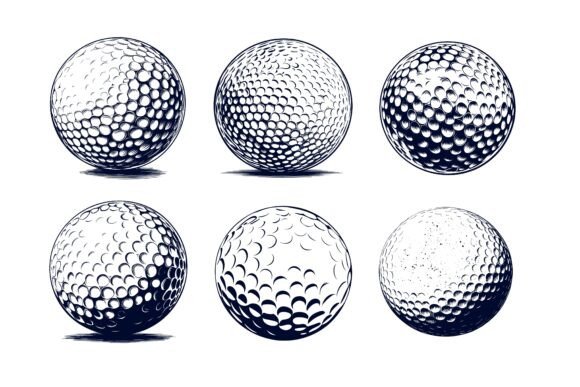
A rough sketch of a golf ball holds character: the subtle dimples, the spherical weight, the slight shadows that imply motion. However, when you attempt to use that sketch in a professional layout, problems surface fast. Pencil lines lack uniform thickness, scanned artwork introduces pixelation, and resizing turns clarity into blur. Designers often waste hours redrawing basic shapes to meet production standards. What if you could bypass this technical grind? AI EPS illustration sets are meticulously built on that same foundational sketch, then refined with vector precision. Every curve, highlight, and contour is perfected so you inherit the artistic intention without the legwork. The result is a digital file that respects the original sketch of a golf ball while offering flawless lines and infinite scalability.
Why Vector-Based Golf Ball Illustrations Solve Real Workflow Problems
Many users ask why file type matters. The answer lies in versatility. A JPEG of a sketch of a golf ball might suffice for a social post, but resize it for a billboard and you’ll see jagged edges. AI (Adobe Illustrator) and EPS (Encapsulated PostScript) formats are vector-based, meaning graphics are defined by mathematical paths rather than pixels. This allows you to scale a tiny icon into a massive backdrop with zero quality loss. When you download an EPS or AI file containing an sketch of a golf ball illustration, you gain a foundation that can be:
- Enlarged for trade show banners without distortion
- Imported into CAD or 3D software for product mockups
- Broken into layers to isolate dimple patterns or highlights
- Re-colored in seconds to match brand palettes
This technical flexibility directly addresses the pain of re-creating artwork for every output. Instead of clinging to a static image, you possess a living graphic ready for any medium.
Key Characteristics of a Premium Illustrative Set
Not all digital assets are equal. When evaluating an AI EPS collection built around a sketch of a golf ball, certain attributes separate time-saving tools from digital clutter. Seek out files that boast neat organization—a logical layer structure where dimples, core sphere, shadows, and background elements sit on separate named layers. This tidiness lets you toggle visibility or adjust specific components without hunting through merged shapes. Consistency in detail is equally critical; a set might include a front view, side angle, and stylistic sketch of a golf ball variant, and they should appear cohesive, as if from the same family. Perfection in small touches like dimple depth, light reflection, and edge sharpness determines whether the graphic feels like a cheap trace or a thoughtful interpretation.
Cross-Platform Usability for Diverse Creative Teams
Friction often arises when team members use different operating systems. A designer on Mac might struggle with a file optimized only for Windows, or vice versa. The best illustration packages specifically state compatibility with both environments. When you access an AI EPS and JPG bundle featuring a sketch of a golf ball, you ensure that colleagues working in various software—Adobe Illustrator, CorelDRAW, Affinity Designer, or even presentation tools like PowerPoint—can seamlessly open and edit the artwork. The inclusion of a high-resolution JPG acts as a quick-preview alternative and a direct insertion option for web designers who don’t need vector manipulation. This upfront thoughtfulness saves hours of file-conversion headaches and promotes collaborative flow.
Editing Freedom: How to Customize Your Golf Ball Illustration
Off-the-shelf icons often fail because they don’t cater to specific brand voices. Imagine you need a sketch of a golf ball for a luxury tournament website, but the default color is bright sports orange. With well-structured AI EPS files, you can select individual vector paths in Illustrator and adjust fills instantly—perhaps burnishing the ball with gold gradients and subtle textures. The editing extends beyond color: you can resize individual dimples to create a stylized pattern, remove the outline for a flat design look, or duplicate layers to simulate motion blur for a dynamic header graphic. Because the file springs from a hand-sketched origin, it retains organic nuance that withstands these modifications, avoiding a sterile algorithmic feel.
Applications that Extend Across Print, Web, and Emerging Media
The real value of an organized sketch of a golf ball illustration emerges when you tally its touchpoints. For a single event campaign, you might deploy the graphic in:
- A glossy tri-fold brochure (printed at 300 DPI using the EPS in InDesign)
- Animated web banners (SVG exports from the AI file, brought into After Effects)
- App navigation icons (scaled down precisely to 48x48px without losing legibility)
- Infographic charts comparing golf ball spin rates (the vector forms can be integrated directly into data visualization tools)
- Promotional merchandise mockups (placing the editable symbol onto hats, tees, or invitations)
This single asset, rooted in that initial sketch of a golf ball, bridges the gap between rapid digital publishing and high-end print production. Its versatility reduces the need to commission multiple versions of the same icon, saving budget and maintaining visual consistency.
The Hidden Efficiency of Layer Organization and Structure
Disorganized files waste more time than most realize. You open a downloaded folder to find dozens of unnamed layers, grouped elements that don’t make logical sense, and effects that break upon color changes. A thoughtfully prepared sketch of a golf ball illustration set structures its layers clearly—perhaps "Shadows", "Highlights", "Dimple_Base", "Outline", and "Background". This naming convention allows you to instantly locate and edit the component you need. For Mac users with Illustrator, the layer panel remains intuitive; for Windows users relying on CorelDRAW, the same structure imports with preservation. Such organization is a quiet superpower; it turns an complex illustration into a modular building block, where you can strip away decorative elements for a minimal logo or intensify highlights for a 3D effect.
Why Detail Perfection Elevates Your Entire Project
A sketch of a golf ball might seem trivial, but its execution can make or break a sophisticated design. Audiences subconsciously assess quality: a golf ball with uneven dimples or a lopsided shape signals carelessness. When you select an illustration that emphasizes perfection in details—uniform dimple geometry, balanced light and shadow, appropriate stroke weights—you amplify the perceived value of your entire layout. This matters for industries from sports equipment retail to hospitality. A resort’s newsletter using a pristine golf ball icon suggests attention to the guest experience. A training app employing a crisp symbol implies reliable functionality. The initial sketch serves as the soul, but refined digital craftsmanship ensures that soul is presented without flaws.
Integrating the Illustration into a Cohesive Workflow
To maximize the benefit of your sketch of a golf ball download, consider a practical integration plan. Start by opening both the AI (for full editing power) and JPG (for quick reference) files. In the AI version, explore layers and try an immediate color change to your brand primary hues. Save a copy in your asset library as a symbol for future reuse. For web projects, export specific layers as SVG or PNG at appropriate resolutions. For print collateral, embed the EPS directly, ensuring the graphic remains sharp when the printer processes the file. Keep the original sketched version untouched, serving as a master file from which all variants emerge. This approach prevents accidental overwrites and keeps your creative options open.
Common Mistakes When Using Downloaded Illustrations
Even with an excellent sketch of a golf ball illustration, pitfalls exist. Avoid the urge to simply drop the JPG into a Word document and stretch it—this distorts proportions and reduces quality. Don’t neglect to ungroup and explore layers, as hidden elements may contain the exact detail you need. Ensure that when you modify colors, you update all related linked assets across your project to maintain consistency. Also, verify that the license permits your intended use, especially for commercial merchandise. A properly created AI EPS set comes with clarity, but responsible usage depends on your attention. Treat the file as a starting point, not a static final product, and it will reward you countless times over.
Future-Proofing Your Design Library with Versatile Assets
Digital needs evolve rapidly. A graphic that starts as a web icon might later be requested for augmented reality overlays or animated video. By archiving your sketch of a golf ball in the most flexible vector formats possible, you build a library that adapts across years. AI and EPS files remain industry standards in the professional design world, opening easily in newer software versions and exporting to emerging formats. This forward-thinking choice protects the time you invest in customizing and integrating the illustration now. It ensures that when a client asks for a sport-themed mobile interface or a interactive PDF, you aren’t scrambling to recreate artwork but simply repurposing a trusted, layered master file.
Making the Decision: What to Look For Before You Download
As you evaluate illustration sets, ask specific questions: Does the preview show the sketch of a golf ball in isolation and in context? Are layer screenshots provided, confirming organization? Does the description explicitly mention both Mac and Windows compatibility? Look for assurances about detail consistency—the description should not just claim "perfection," but you might infer it from sample zoom views. Confirm that JPG versions are high-resolution (at least 300 DPI) for immediate print use. The promise of easy color modification should be backed by a file structure that actually permits it, so check for terms like “editable vector” or “change fills and strokes.” These signals indicate a creator who understands designer workflows and human needs over just file dumping.
Bringing Your Creative Vision to Life
Ultimately, a sketch of a golf ball illustration set serves as a bridge between imagination and execution. You hold a vision: a sleek advertisement, a playful tutorial graphic, a polished presentation. The resource gives you the raw material—already thoughtfully organized, endlessly editable, and visually flawless—to realize that vision without technical compromise. It respects your desire to personalize, to tweak, to make the image unmistakably yours while doing the heavy lifting of foundational geometry. As you work, you’ll find that tasks like swapping a color scheme for a seasonal campaign or isolating a ball silhouette for a letterhead become effortless. This is the hidden value of a well-crafted digital asset: it stays with you, growing with your skills and projects, while that initial sketch of a golf ball continues to infuse every iteration with authentic, human-originated charm.
So when you consider your next design hurdle—whether a last-minute flyer, a comprehensive infographic, or a symbol for your app—returning to a reliable, detail-rich illustration can cut hours from your process. The combination of AI, EPS, and JPG formats creates a safety net for any output scenario, while the neat layer structure and cross-platform design remove common friction points. Above all, the ability to edit, recolor, and reshape the graphic as easily as you scribbled that first sketch puts the creative control firmly back in your hands. That is the difference a purposeful illustration set makes.